
Flat Roofs That Stop Failing Prematurely
EPDM rubber roofing in Philadelphia for flat and low-slope surfaces showing seam splits, punctures, or membrane failure
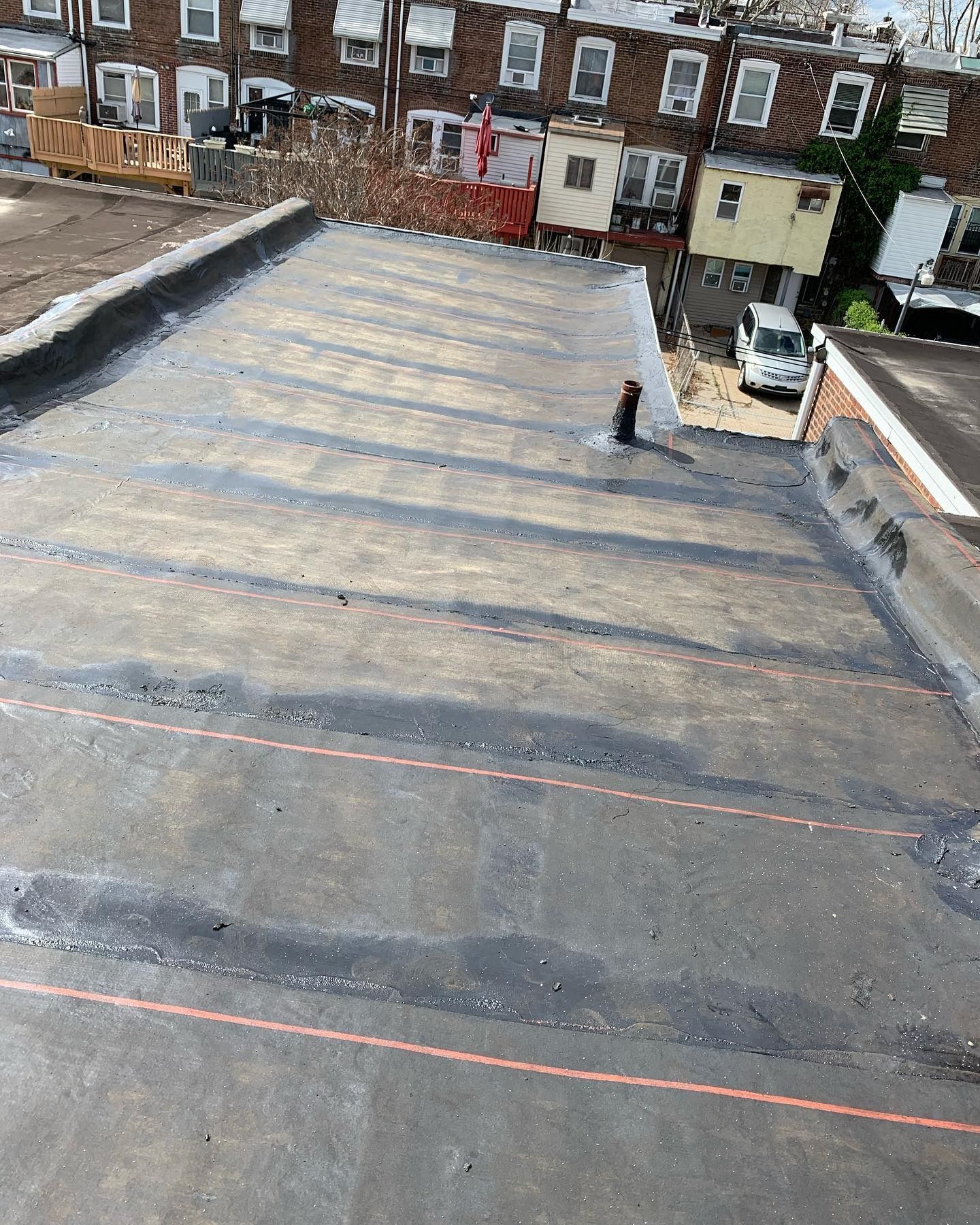
Philadelphia's residential and commercial building stock is defined in large part by row homes, twin houses, and multi-unit properties built across the late nineteenth and early twentieth centuries—nearly all of which were constructed with flat or low-slope roof decks as a standard design feature. White's Roofing and Contracting LLC installs and repairs EPDM rubber roofing systems specifically suited to those flat-deck configurations, where standing water, poor drainage, and membrane deterioration are recurring structural concerns. When a flat roof begins failing, the evidence shows up inside the building first: ceiling stains, bubbling drywall, and water tracking along joists before a visible exterior breach is ever obvious.
EPDM, or ethylene propylene diene monomer, is a single-ply rubber membrane bonded directly to the roof substrate, covering seams, curbs, and penetrations in a continuous system that eliminates the layered failure points common in older built-up roofing. White's Roofing handles full tearoff of the existing membrane, substrate evaluation and preparation, membrane installation, and complete flashing detail work around curbs, walls, and penetrations. Seam adhesion and edge termination are where most EPDM failures originate, so those details are treated as primary workpoints rather than finishing steps.
Arrange an on-site roof evaluation to identify current membrane condition, drainage slope, and any substrate damage before installation begins.
How EPDM Addresses Flat Roof Failure Patterns
The tearoff phase does more than remove the old membrane—it exposes what's happening at the deck level, where rot, compression, or delamination in the substrate can make a new membrane installation fail prematurely if left unaddressed. White's Roofing assesses the deck condition before any new material is applied, because a sound EPDM installation depends as much on what's underneath as on the membrane itself. Repair work follows the same logic: punctures are patched using compatible EPDM flashing material, and seam splits are re-adhered and reinforced rather than simply sealed over with lap cement, which fails quickly under ponding water.
Once the membrane is installed and fully adhered, the surface should lie flat without ridges, bubbles, or visible seam edges, and all penetrations—pipes, vents, skylights, parapet walls—should be wrapped with flashed terminations that direct water away from the opening rather than into it. Drains should clear within minutes of rainfall rather than holding standing water for hours. These are the observable checks that distinguish a properly installed system from one that will require repairs within two or three seasons.
EPDM installs for flat-deck projects at White's Roofing, including skylight tearoff and flashing integration, are typically scoped between $2,000 and $3,800 depending on deck size, substrate condition, and penetration count—a range that reflects full system work rather than surface-only applications.
What Property Owners Ask About the Work
These questions address how EPDM membrane work is performed on Philadelphia's flat-roof residential and multi-unit properties, where deck conditions and penetration counts vary significantly by building age and prior repair history.
What preparation does the roof deck need before EPDM membrane installation?
The existing membrane must be fully removed so the deck can be inspected for soft spots, rot, or delamination; any compromised decking is replaced before the new membrane is applied, because EPDM bonded over a failing substrate will lift and split within a few seasons.
How are penetrations like pipes and vents handled in an EPDM system?
Each penetration is wrapped with prefabricated or field-fabricated EPDM flashing that extends several inches onto the field membrane and is adhered with bonding adhesive, creating a watertight collar rather than relying on caulk or sealant alone.
What does a properly installed EPDM seam look like once the work is finished?
A finished seam should be flat, fully adhered across its entire width with no lifting edges, and invisible from a normal standing position—if a seam has a visible ridge or edge curl, adhesion is incomplete and water will work underneath it.
When does an EPDM membrane need full replacement versus a repair?
Repairs are appropriate for isolated punctures, single seam splits, or localized flashing failures; when the membrane shows widespread crazing, multiple seam failures, or has been repeatedly patched in the same areas, full tearoff and replacement is the more reliable path.
How does building age in Philadelphia affect the scope of a flat roof project?
Many row homes and twin houses in the city were built with wood plank decking or early-generation fiberboard, both of which are vulnerable to water retention over decades of membrane use; older properties in neighborhoods like Kensington or West Philadelphia frequently require partial or full deck replacement as part of the membrane installation.
White's Roofing and Contracting LLC is available to review your flat roof's current membrane condition and walk through what a full EPDM installation or targeted repair would involve for your specific property. White's Roofing also installs EPDM rubber roofing in Bristol.