
Old Roofs Replaced Before Failure Costs More
Roof replacement in Philadelphia for aging structures where repair no longer addresses the underlying condition
Philadelphia's housing stock runs deep into the twentieth century—and in many neighborhoods, well before it. A home built in 1930 or 1950 may have had two or three roofing systems applied over its original deck, each one masking conditions the next contractor inherited without examining. White's Roofing & Contracting LLC approaches every replacement with a full tearoff that exposes the decking before any material decision is finalized. What's found there—soft spots, delaminated board sheathing, ventilation gaps, or prior water channeling—determines what gets replaced alongside the surface system.
The replacement sequence begins with an attic inspection before tearoff, not after. Identifying moisture intrusion patterns, rafter condition, and existing ventilation layout at that stage allows the material and system selection to account for what the new roof will be sitting on—rather than discovering mid-job that the deck needs partial or full replacement. White's Roofing explains labor and material warranties as separate line items, because they cover different failure scenarios and clients need to understand which one applies to a given situation.
Request a full replacement evaluation that starts with the attic rather than a surface estimate.
What a Complete Roof Replacement Actually Covers
A full replacement involves more than pulling off existing shingles and laying new ones. Tearoff includes removing existing layers down to the deck surface, inspecting and repairing that deck where needed, installing underlayment correctly before any surface material goes down, and replacing flashing at every penetration and edge transition. Skipping or compressing any of those steps produces a new-looking roof with the same structural vulnerabilities the old one had. White's Roofing & Contracting LLC completes each stage in sequence and does not overlay new material over existing systems.
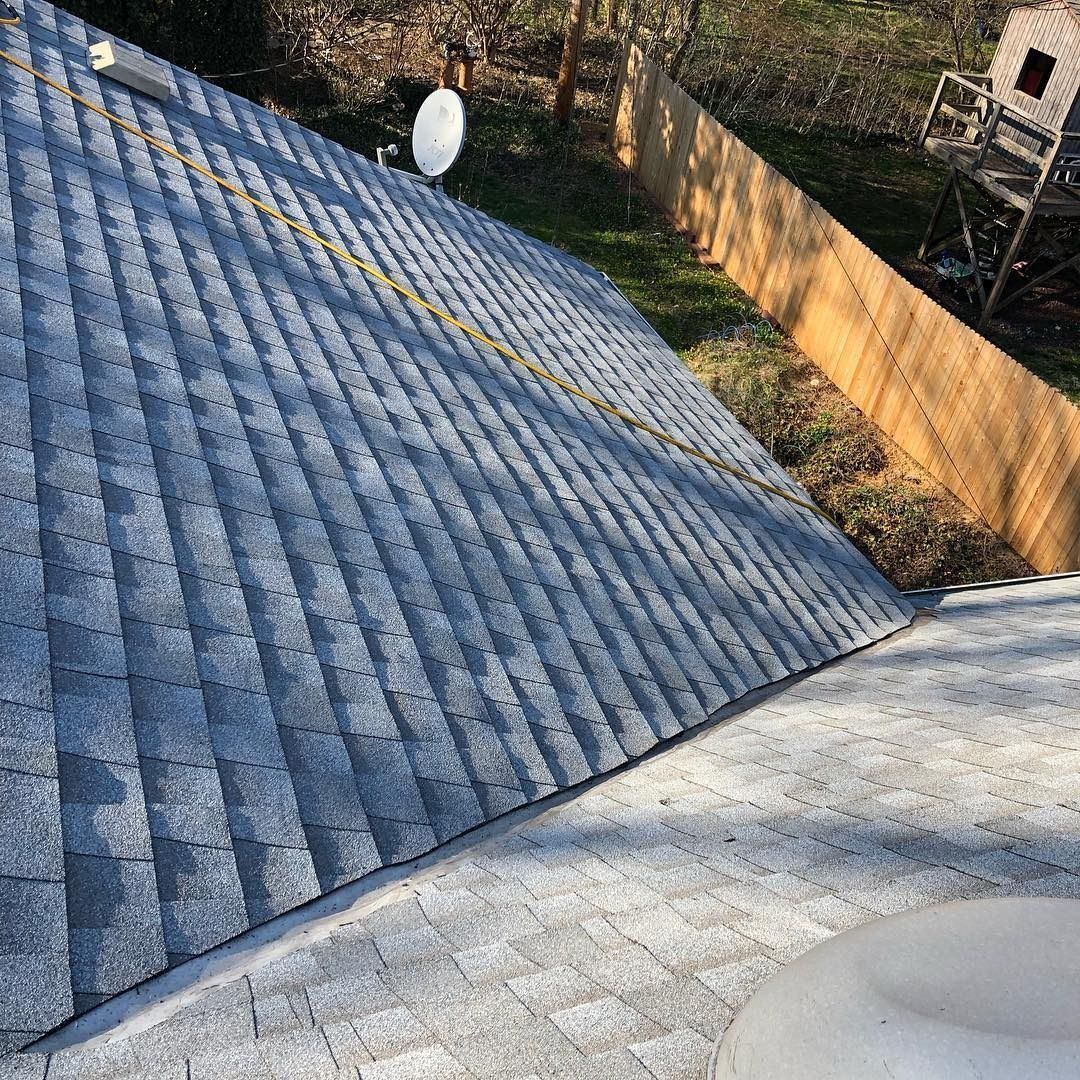
When the job is complete, the visible markers of a correct replacement include clean drip edge terminations at every eave, step flashing seated fully at wall intersections rather than sealed with surface caulk, and ridge ventilation that matches the intake area calculated from the attic assessment. These details are what determine whether a replacement lasts thirty years or begins showing failure in five.
Philadelphia replacements handled by White's Roofing typically fall in the $2,000–$3,800 range for the surface system itself—deck repairs, additional flashing work, or skylight integration are scoped and priced separately after the attic inspection confirms what the tearoff will uncover.
Questions Before Starting Your Replacement Project
Roof replacement decisions on Philadelphia's older homes involve structural considerations that go beyond surface material selection—these questions address the work sequence and what to expect during a full replacement.
Why does the attic inspection happen before tearoff rather than after?
The attic reveals moisture travel patterns, decking condition, and ventilation layout that directly affect material choice and scope—waiting until tearoff to find significant decking damage adds cost and delay to a job that should have been scoped accurately from the start.
What is the difference between a material warranty and a labor warranty on a new roof?
Material warranties cover defects in the product itself and are issued by the manufacturer—labor warranties cover the installation workmanship and are issued by the contractor, and the two have different terms, exclusions, and claim processes that should be understood before the job begins.
How does the board sheathing common in pre-1950 Philadelphia homes affect a replacement?
Board sheathing gaps and surface irregularities require different underlayment fastening than plywood decks, and boards that have swelled or split over decades may need partial replacement to provide a stable nailing surface for the new system.
What should a completed tearoff surface look like before new material goes down?
The exposed deck should be solid underfoot with no soft spots, visually consistent in color without large stained or darkened sections indicating moisture saturation, and free of protruding fasteners or splits that would telegraph through the finished surface.
How does storm damage change the replacement timeline compared to a planned end-of-life replacement?
Storm-triggered replacements often involve insurance documentation as a required step before work authorization, which introduces a documentation and claim review phase that planned replacements do not—understanding that sequence upfront prevents delays mid-project.
White's Roofing & Contracting LLC has completed roof replacements across Philadelphia for eight years, working through the full range of the city's building ages and construction types. White's Roofing & Contracting LLC also performs roof replacement in Bristol and across the Delaware Valley. Set up a replacement evaluation to get an attic-first assessment and a clearly scoped estimate.