
Gutters That Stop Draining Need Attention Now
Gutter repair in Philadelphia for sagging, leaking, or separated sections that send water toward your foundation
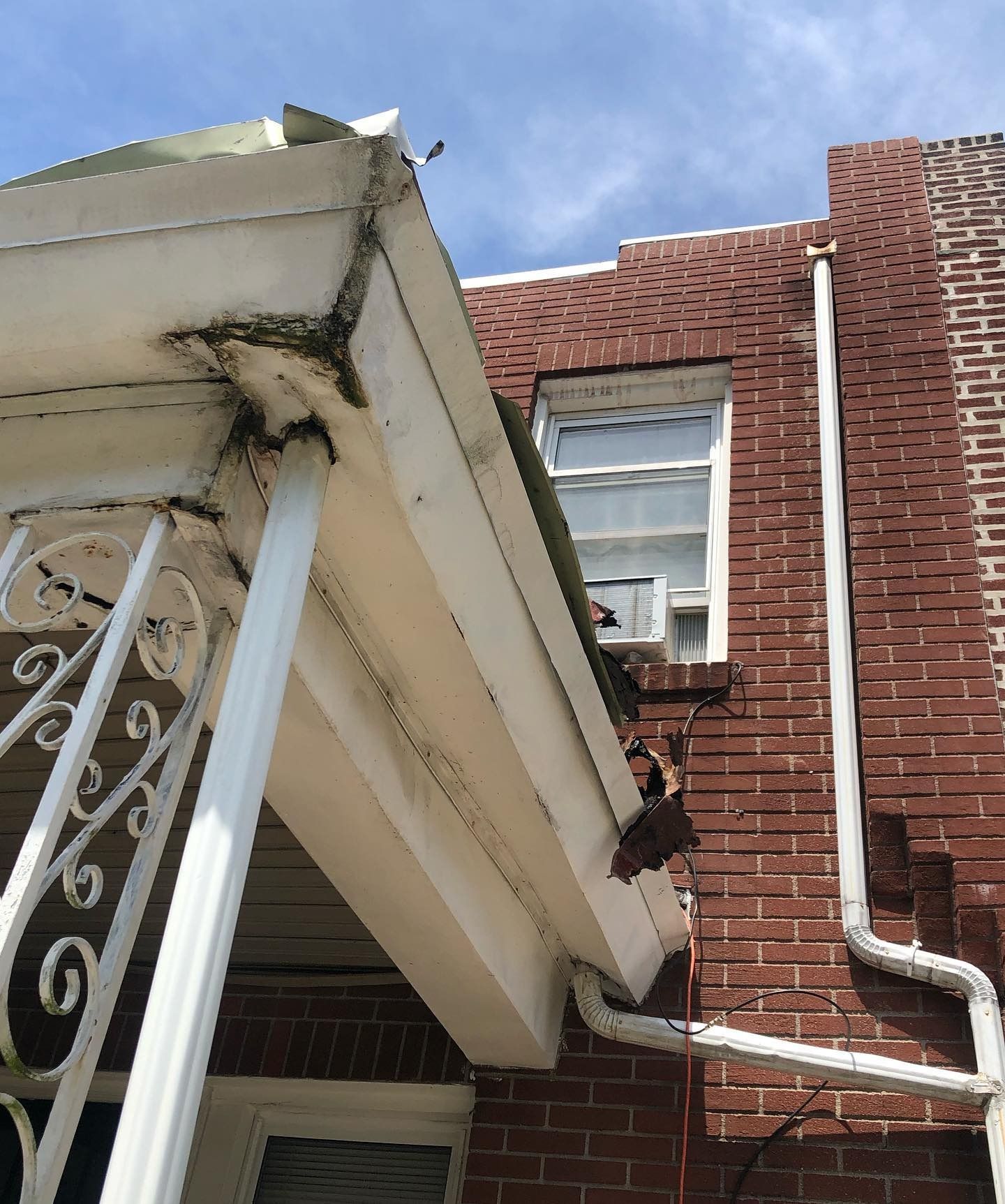
Row homes and twin-style construction dominate large stretches of Philadelphia's residential stock, and the gutters on those properties were often installed as lightweight aluminum systems sized for simpler drainage loads. White's Roofing & Contracting LLC repairs sagging, leaking, and damaged gutters across Philadelphia, restoring proper water flow before misdirected runoff reaches the fascia, soffit, or foundation. Property owners who notice water sheeting over the front edge of a gutter during rain, or who find pooling along the foundation after storms, are looking at a drainage failure that compounds with each wet event.
The repair process begins with identifying where the system is actually failing, which is not always where it looks worst. White's Roofing checks hanger spacing and condition, reseals joints that have separated, and evaluates downspout flow to confirm water exits the system cleanly at ground level. Fascia condition is assessed alongside the gutter itself, since prolonged contact with trapped moisture causes wood fascia to soften before visible rot appears from the street.
Arrange an on-site evaluation to identify which sections of your gutter system are failing and what repairs will restore drainage.
How Gutter Repair Addresses the Underlying Failure
Most gutter failures trace back to one of three mechanical causes: hangers pulling away from the fascia board, sealed joints that have opened under repeated expansion cycles, or sections that have shifted out of slope so water pools rather than moves. Each failure behaves differently and requires a different fix. Rehang work restores the pitch that controls flow rate; joint resealing stops the drip that runs behind the gutter and soaks the fascia; and clearing debris from downspout inlets is separate from gutter cleaning but often happens alongside structural repairs when a blockage has added weight that accelerated sagging.
After repairs are completed, water should move through the full gutter run and exit cleanly at the downspout without pooling at seams, overflowing at the corners, or dripping behind the fascia board. Those are the three visible checkpoints that confirm the repair held. White's Roofing also documents fascia condition as part of the assessment, so property owners have a clear picture of whether wood replacement is needed now or can be deferred.
In cases where a gutter section has corroded through or pulled away completely, replacement of that run may be more cost-effective than patching, and the inspection will clarify which approach applies to each section of the system. Downspout extensions and diverters are evaluated separately and can be added when drainage at grade needs to be directed away from foundation walls.
What Property Owners Ask About Gutter Repair
The questions below address how gutter repair is performed, what the process involves, and what to look for once work is complete.
What are the signs that a gutter needs repair rather than just cleaning?
If water spills over the gutter edge during moderate rain even after the system is clear of debris, the gutter has likely shifted out of slope or a joint has opened. Overflowing at a specific point rather than along the full run usually indicates a structural problem with that section.
How does hanger replacement work during a gutter repair?
Existing hangers are removed and new fasteners are driven into solid fascia material at the correct spacing, then the gutter is repositioned to restore slope toward the downspout. In Philadelphia row homes where fascia boards may have softened from years of moisture contact, the fascia condition is checked before new hangers are set.
What causes gutter joints to separate and how are they resealed?
Joints separate when the original sealant dries out and loses adhesion, allowing sections to pull apart under the weight of water and debris. The joint is cleaned, old sealant is removed, and a fresh application is made from the inside of the gutter where it bonds to both sections simultaneously.
When does a gutter repair also require fascia work?
Fascia repair becomes necessary when the wood behind the gutter has absorbed enough moisture to become soft or punky, which means new hangers will not hold without a solid substrate. The fascia assessment happens during the gutter inspection so both issues can be addressed in the same visit.
How do you check whether downspouts are functioning after a gutter repair?
Downspout flow is tested by running water from the top of the system and confirming it exits at grade without backing up or pooling at elbows. A slow exit usually points to a partial blockage or a crushed elbow section that restricts flow even when the gutter above is clear.
White's Roofing & Contracting LLC works through each section of the gutter system methodically so repairs address the actual failure point rather than just the visible symptom. White's Roofing also provides gutter repair in Bristol and throughout the Delaware Valley. Call (267) 235-8592 to schedule an on-site assessment of your gutter system.